

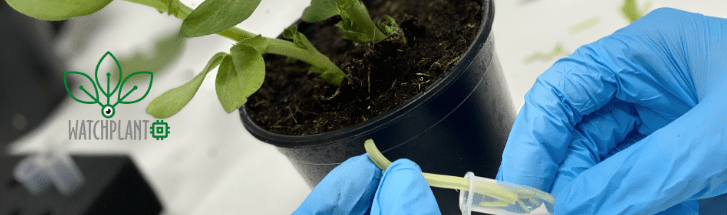
The Instituto Tecnológico de la Energía (ITE), together with a European consortium, has developed an innovative network of biosensors in plants through the Watchplant project. The project has created devices that, through the analysis of the biochemical responses of plants in real time, allow the evaluation of critical parameters such as air quality, temperature, and humidity. Among its most outstanding innovations is a portable biosensor that has the capacity to extract and analyze sap in just 10 minutes. This pioneering device identifies key biomolecules that reflect the environmental stress of plants due to factors such as pollution or water stress, offering rapid detection without damaging plant organisms.
Intelligence and sustainability applied to the environment
Its capacity to offer continuous and real-time monitoring allows the detection of adverse conditions before they manifest with conventional methods. This is very important for environmental managers, urban planners, and farmers, who now have the opportunity to anticipate problems and thus reduce the impact of human activities in urban and forest environments.
Applications and future
The benefits of this technology cover multiple areas: from the proactive management of environmental quality in cities and ecosystems to the prevention of problems in the agri-food sector. In addition, it allows a level of autonomy and sustainability that could revolutionize large-scale monitoring, opening new possibilities in crop improvement, ecosystem protection, and urban sustainability.
The success of the Watchplant project lies in the collaboration of leading institutions such as the Spanish National Research Council (CSIC) and several European universities, each contributing their expertise in biotechnology, artificial intelligence, advanced sensors, and microfabrication. This multidisciplinary integration has given rise to a comprehensive solution that combines cutting-edge technology with a vision oriented towards sustainability.


