

Last Monday, October 23, we had Damián Pumar, Technical Coach (XP) at CodeScouts, in Madrid. He talked to us about building frontend applications and how to face the challenges of scaling them correctly, implementing clean architecture.
In the fast-paced world of web application development, “Clean Architecture” has become an essential methodology to ensure the creation of robust and stable frontend applications. For information technology (IT) companies, understanding the fundamental principles of Clean Architecture and its application in frontend development is crucial to ensure the efficiency and scalability of their digital products.
Why clean?
It is a software design approach that promotes the creation of modular and loosely coupled systems, allowing for more agile and flexible development. In the context of frontend application development, it focuses on the clear separation of presentation layers, business logic, and data access, resulting in an application that is easy to understand, test, and maintain.
Benefits
By clearly separating responsibilities and dependencies, developers can work more efficiently and effectively in large and complex teams. The ability to test each layer in isolation also allows for greater code reliability and quality, resulting in more stable and less error-prone applications.
To successfully implement Clean Architecture, it is essential to follow some key principles. The creation of independent modules and the clear definition of interfaces between layers are fundamental to ensure the proper separation of responsibilities. In addition, the adoption of design patterns such as dependency injection and object-oriented programming promotes a more flexible and maintainable code structure.
As the complexity of web applications continues to increase, the adoption of Clean Architecture in the frontend becomes increasingly crucial. By facilitating scalability and long-term maintenance, it ensures that frontend applications can adapt and evolve with changing market needs and user demands.
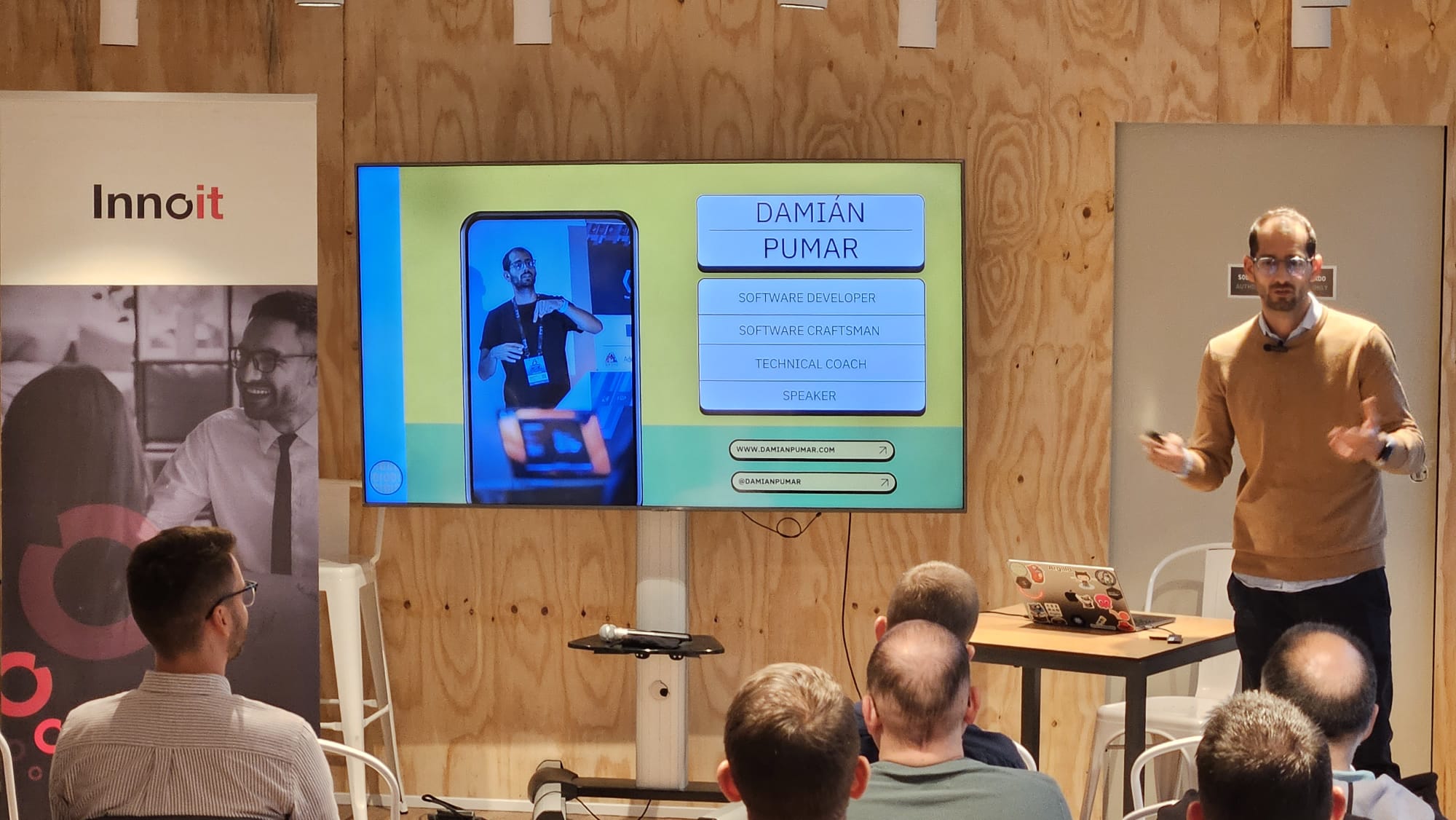
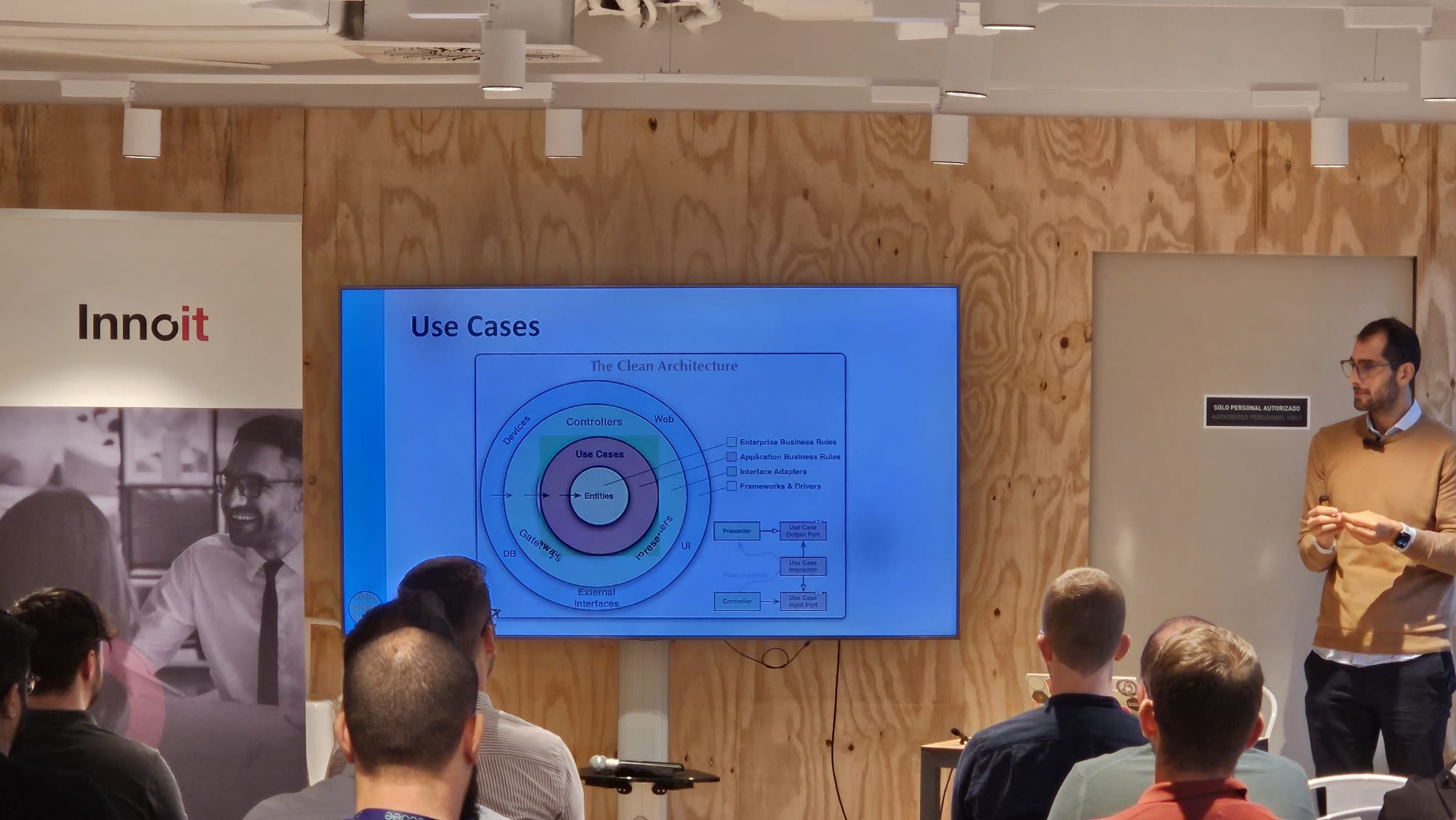
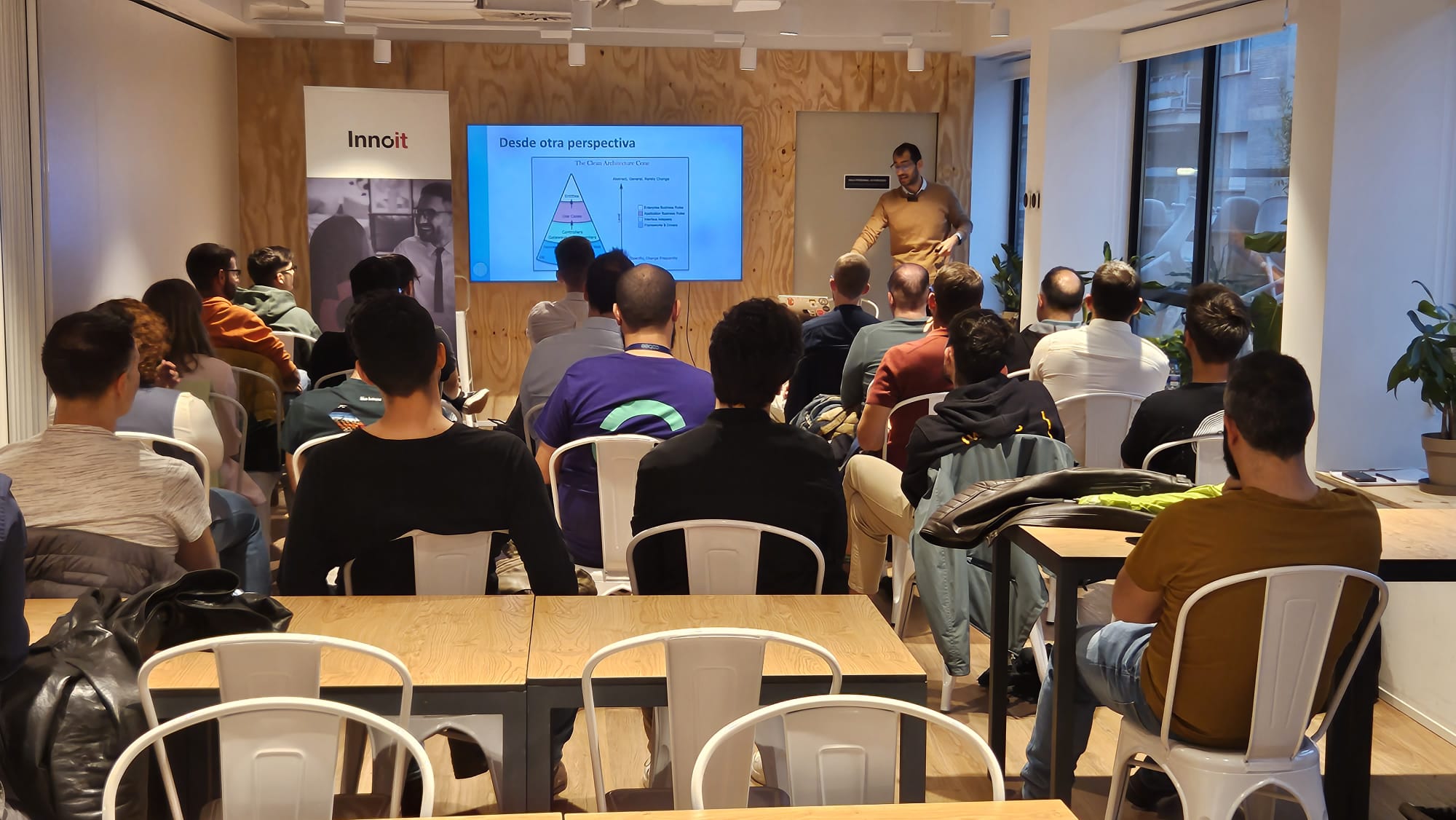
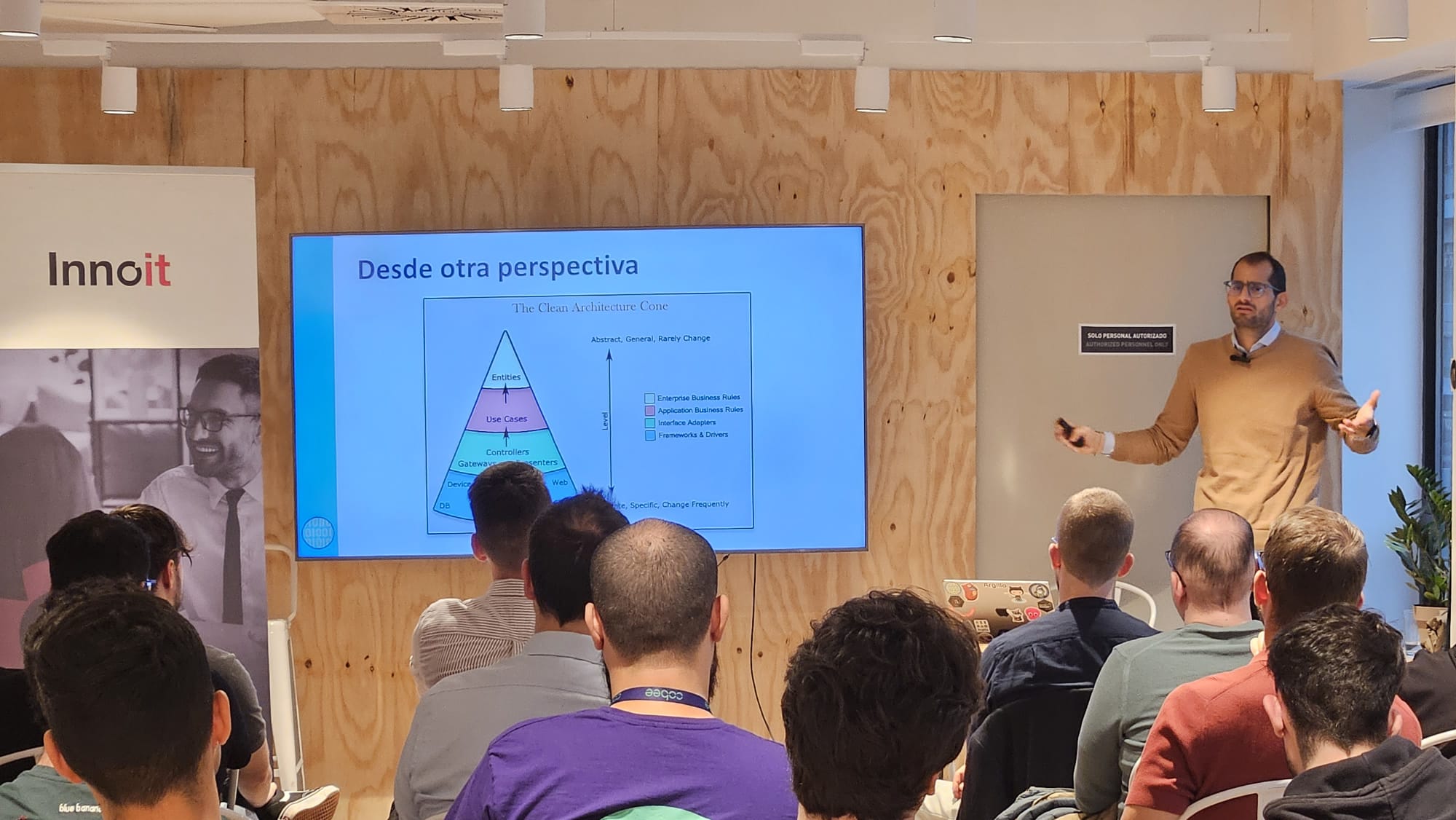
Some highlights of the event, which you can see in full on our YouTube channel.
- It provides advantages such as independence from external services.
- It is worthwhile for building a white-label application.
- If the frontend application has or will have a considerable size, it will also be worthwhile.
- Difference between external services and backend connections.
- Dependency injection is a powerful tool for resolving dependencies in frontend applications.
- Using multiple frameworks or components in a project can be beneficial, but replacing the entire framework is complex.
- The use of specific functions or components from different frameworks can improve the user interface without changing the entire framework.
At InnoIT, we closely follow the development of all new technologies, and our talents are always trained to the latest standards. If you are interested in integrating highly qualified personnel into your team, contact us.


